I'm spending the summer in Churchill, Manitoba to work on my own projects and help other researchers with theirs. Here, I will write about the crazy Churchill adventures I get into... oh, and the research too!
Today was the final sampling for stage one of my experiment. It was a long day... So to spice things up, let's add a bit of comic book styling!
This is one of my controls, so I did not add any nutrients to it. But
if you look closely at the sediment (the brown stuff), the grainy look is
actually fluffy and turbulent. That look is the benthic algal mat (BAM)
that I am most interested in. During sampling today, I found out
that I really can't tell the difference visually between the
different spikes and the controls with no spikes. They all
seem to have BAM. But that's where the sampling for the pigments
come in...
So first, I recruited Brent, Roland, and Lauren to carefully walk,
two at a time, the containers from the pool to the study centre
without them tripping or stirring up the sediment. As this picture
shows, they seemed to have done a pretty good job. The water
on top of the sediment is still clear! Thanks!
Ok, down to business. How do we sample for pigments anyway?
So we have this mud at the bottom of the container that contains
BAM. Also at my disposal is a spoon, a little syringe with
a flat head (not the needle type) and on the right, a filter
apparatus. Let's go!
So let's get a better look at the filtering apparatus. It has a water
collection container underneath the tray that holds the filter
then a lid in the background that will go on top of the filter tray
so I can add sediment and water without it spilling over.
Next I grab a glass filter, using tweezers so I don't contaminate
the filters with my filthy fingers! (Speaking of, do you see the
nice cut on my index finger? That was part of my first blood
experience, there were two other injuries in association, and this
was the second worse. I think I might get a nice scar from it!)
Place filter on top of the filtering apparatus that was already
introduced while trying really hard to focus the camera with
one hand. Click!
The exciting part! I use that flat headed syring to obtain
the BAM cookie. SLURP!
I then measured the height of the sediment in the tube. By
knowing the height and the diameter of the tube, I can figure
out the volume of the sediment I'm filtering! (The BAM
cookie is so fluffy that it easily seeps out of this small cylinder!)
I then plop it on top of the filter, which I forgot to take a picture of...
sorry. So here is the sound effect, SPLAT!
This is the sweet secret spy gun that they let me use! Not only
can it scare away polar bears, make me feel sneaky, and give me
some fun posing opportunities, but it also provides the suction
to pull the water down through the filter! Ok, so it's a hand pump...
Still pretty cool though, and a great finger strengthening work out!
In fact, I suggest to climbers that you should volunteer in a
water ecology lab, just to get the best finger work outs! You'll
be thanking the scientists (while they laugh at you behind
your back...). SQUEEZE!
So this is the sediment in the filtering apparatus on top of
the filter. Pretty sweet, non? SUCK!
Here, I took off the top of the filtering mechanism so you can
see the BAM cookie on the white filter. You can also see
where the hose attaches to the lower chamber. The hose is
connected to that hand pump that sucks air out of the bottom
chamber by blowing it out of the the hand pump. But as my
high school physics teacher taught me, there is no such thing as
sucking. The suction is caused by blowing somewhere else which
causes a vacuum. I'll always remember that with the phrase:
"Physics doesn't suck, it blows!" so... BLOW!
Then I fold the filter in half, and wrap it up in aluminum foil
to keep it in the dark, keep it moist, and give it some protection.
Using the tweezers on this is so hard sometimes! CRINKLE!
A Whirl-Pak is a fancy sampling bag that we science-y people
like to use because they are sterile and durable. I suppose
that I am revealing the secret codes written here so I might as
well explain my evil plan... I'm put BAM into this bag!
Muhahaha! ... I guess you knew that by now... Thanks for
sticking it out! Ok, so the 20-N2 is the code for this sample. I
spiked the containers with three different concentrations,
10 times the maximum nutrient that we recorded last summer,
20x that, and 50x that. So this is a 20x spike. The N (which due to glare,
looks like a U) stands for Nitrate. I spiked the samples with Phosphate,
Nitrate, and Ammonia to see which one will cause the
algae to grow the most. In this container, I spiked with Nitrate.
Left is the name of the lake that I sampled from. This is the
first of two experiments, hence the Exp 1. Then the date - you
should have gotten that. Then the label Chl a - Benthos because
this will be sent to the lab, and the chl a with be detected using
a spectrometer (detecting the wavelength for Chl a). Then I have
the diameter of the syringe and the thickness of the sample I
obtained in the syringe so I can calculate volume. I then threw it
in the freezer and packed it with ice so it can be shipped back
to Waterloo and analyzed!
This is the sad part...
I had to dump all of my containers... (and
got covered in mud in the process!)
The dark splatter is what I have left of my experiment... :(
And for the fun of the day...
Back by popular demand... Spot the ptarmigan! This one is
much harder since it is a female sitting on her nest and the
camouflage is amazing. Even knowing that she is there, I can
barely find her. Good luck!
The crew! From left to right, Lauren - the PhD student, Roland
- my prof/supervisor, Brent - also my prof on projects, and me
with a bag of peat for Merrin who is back in Waterloo but is my
third prof/supervisor. My fourth prof/supervisor is probably somewhere
in the building above my head which is the new CNSC. The building
next to Lauren's head is the old CNSC. These three kept me up
playing Euchre after our hike with Vanya to the study lakes so I didn't have
time to write this blog until now! So here it is! Now to sleep! SNORE!
Today we had a cold east wind of 30 km/hr gusting to 60 km/hr so the flags outside the study centre were snapping. Perhaps it was this scene that inspired the song to develop note for note out of my mouth during the drive to town to pick up the researchers off of the train or just the chance to be alone in a van with bad radio reception and an urge to sing for days without any release (I'm too shy to sing in front of people!)
"When I get older, I will be stronger, They'll call me freedom, just like a Wavin' Flag!" - K'Naan
This song holds so many meanings, from the inspiration that it embodied during last year's FIFA World Cup, when I first heard it, to the poverty struggle that keeps hope alive in what I think the original intent of the song was. Today, I'm feeling that this song relates to my research (thanks to my undergrad program, Knowledge Integration, I've been trained to connect anything to anything, but I think that it's a great process of reflection so I will use it here).
I understand how amazingly fortunate I am to have this opportunity to do research up here in Churchill, even more so as an undergrad student out of 3rd year and to stay up here for the entire summer! It's hard to believe that I'm really here sometimes, like the sunrise at 4:00 AM this morning, shining pink and orange into my 6 foot window in my room is just a dream, it's just too much breathless awe! And I thank everyone who has given me a chance to experience this.
That said, with planning and executing this experiment, I still feel so young and inexperienced. I know it's supposed to be a learning process and that I won't get everything right the first time I try to plan an experiment even with the help of 3 direct supervisors. I feel like I'm fighting with myself to get everything ready and planned. I've never been in charge of determining what other people should do for a day, of directing the sampling process rather than being the lab assistant. The experience is powerful and distinct. I was surprised that anyone would listen to me even though I am so young and inexperienced. I also feel like I don't really know enough about the field to truly understand what I am designing - which is where the supervisors come in. I can only explain, superficially, what my experiment means and how it is being analyzed. As soon as someone who is familiar with the field asks a question, I'm uncertain and tend to ask the question back because I just don't know enough in this field.
My hope is that when I'm older, when I have time to study a single subject in depth for a year, rather than this intermittent learning that I've been able to grasp, I will finally begin to understand the science in a broader sense and understand the processes involved and how it fits in with a regional or global perspective. So my hope is that I will be stronger, smarter, as I see the grad students and profs around me are, the ones who know everything about their field and if they don't know something it becomes an opportunity for exploration.
So that is my next point, the concept of freedom in exploring science. As the saying goes, the more answers you are able to get, the more questions develop. This question, answer, question cycle drives curiosity and I believe that it is curiosity that drives science. The only limit to the exploration of this science is then the ability to get someone to fund you to research it. Maybe getting funding is a big limitation, but I still think that there is a remarkable freedom that allows a scientist to explore whatever questions their observations lead them to follow. It is the freedom of the mind to learn and discover.
The Tetons and the Snake River - Photo by Ansel Adams
"The Wilderness holds answers to more questions than we have yet learned to ask." - Nancy Newhall
What a great place to start looking for questions, just looking outside, being able to talk to the other researchers up here and exchange stories and perspectives about the same strip of land south of the Bay. Maybe we can start learning how to ask these questions through the freedom of thought, exploration and discussion.
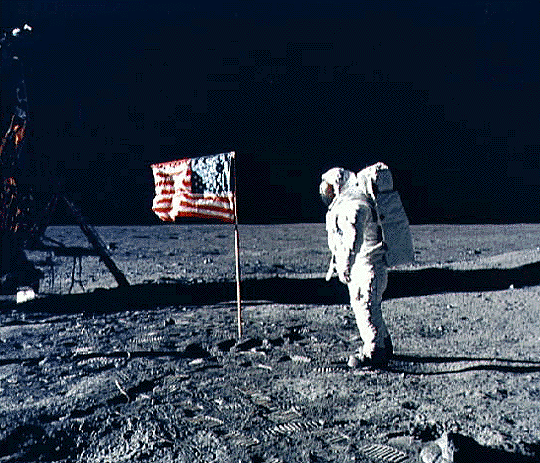
The idea of exploration and discovery makes me think of the early, pioneer explorers, standing on foreign soil, flag waving, marking the achievement and bringing an entire nation, an entire world, with them to that moment, to that soil, to that discovery.
Apollo 11 on the moon - the iconic image of exploration, of the Flag
I will get there, to some discovery and follow my curiosity as I develop my own understanding of the world around me. "And then it goes back." I guess that's where I am right now, back here, trying to figure out my path.
It's been a foggy cold day today, in more ways than just the dreary weather. The fog rolled in off of the Bay, which is now filled with packed ice floats and sweeping up the rocks with high tide.
My mind was fogged and slow the entire day, requiring direct orders and routine to get through the work. I was able to sample my pool again, but kept dropping the containers. Luckily no samples were lost! It does seem like the experiment is working because some of the containers that we spiked are looking fluffy with algal growth! I can't wait to see the water chemistry results to truly verify this.
Unfortunately, it wasn't foggy enough to cancle the helicopter, which I wasn't able to go on. Two weeks ago, my profs got my hopes up that I would be able to fly, and about a week ago, it was confirmed. Yesterday evening at dinner, after I was listening to how the two who had gone up that day had seen caribou and snow geese colonies and lakes that were just starting to form next to ones that were old and the landscape that was 80-90% water, I was told I wasn't going to go up in the chopper. I watched my prof fly off in my place this morning. I really wish I could have gone. Maybe someone will get mysteriously sick next time...? Sometimes I wish I were evil enough to actually make that happen, but I'm just too nice. I'll just try to convince the rain gods to make it pour until they decide that I can go in the chopper at which point the sun will come out and I will be in the sky!
Also foggy, the game. I went into town tonight to watch game 7 of the Stanley Cup finals, Vancouver vs Boston. The internet always cuts out when we try to watch a live feed at the Centre, so we went into town, which was part of the birthday celebration for the lucky prof that got to fly today. We went to the Seaport, which is probably the biggest bar in town and the local hang out. Now back to the fog. Anyone who has watched the game will know that the players of the losing team were in a fog, moving a little too slow, missing the passes, not taking the shots... The worst part was the cackling woman cheering for Boston in a bar full of Canuck fans. I've never heard a more annoying laugh, so loud in the large, vibrating room that it was impossible to hear the game over her cackling. I was tempted to ask her which player she liked the most, or if she could even name a player, because I suspected that she just wanted to upset everyone, not caring about the game itself.
And at this hour, I'm starting to feel the fog roll in on top of me again and think I need to get to sleep.
Today was sampling day - starting with the spiking the samples with nitrogen and phosphorus, discovering that the epindorphs (which is a pipette that allows me to accurately add really small amounts such as less than a milliliter, ml).
So to put a milliliter (ml) in perspective, I hunted down this
water bottle which was surprisingly difficult. Most people up
here don't drink from plastic bottles, but luckily we got a
group from the south in today who disposed of theirs in the
recycling bins, which I dug through (thanks Rob for the hint!)
So, the cap of this bottle can hold 3 ml of water.
Sampling today, I really appreciate what a ml is since all of
my measurements have to be really precise in order to have
enough water for sampling at the end of the experiment!
(Behind me is my lab!)
Then I sampled the containers that sat in the pool. It took an hour for the first sampling at 0 hour (because we - LeeAnn and I - had to add the nutrients, take the sample, then aerate the container so that there is still oxygen in the water which is important for respiration and prevents the water from becoming anoxic - oxygen poor. The sampling became faster for the next two times I did it. I sampled at 6 hours after the spike and then again at 10ish hours after the spike. This way we can see how much of the nutrients are taken up by the algae, the sediment, or the bacteria that are in the containers and when all of the spike is consumed!
After obtaining the samples, we filtered! Oh did we filter! And filter... and filter.
This is the water filtering apparatus. We use an
air pump to suck out the air in the bottom container
which drags down the water we put in the top container.
As the water gets dragged down, it passes through a
filter that gets rid of the big stuff like zooplankton
and dirt. The water in the bottom container goes
into the hundreds of bottles I have to fill
which then get analyzed for the amount of nutrients
in the water - so we can see how much is consumed
and how long it takes to be consumed.
I also took 8 samples of the top layer on the sediment, which
is a layer made of algae and we affectionately call the benthic
algal mat or BAM! I use a little syringe to grab a BAM cookie
and then put it on top of a glass fibre filter which can then
be analyzed for chl a and other pigments. This will tell
us if it was the BAM that consumed the nutrients and grew or
if it was something else.
This is LeeAnn, she is awesome! She stayed really
late with me to finish up the labeling and the filtering
the last two nights. She also has my back when I make
really stupid mistakes, such as that epindorph incident,
she pulled out two more and only delayed us by
half an hour when my mistake could have cost
a couple days! I have many thanks for her!
Two days ago I wrote a short post because I said I was doing something else but couldn't tell you yet. Well, now that it's later, I can reveal the surprise!
Happy Birthday, Kat! Yesterday was Kat's
birthday so the night before that, Carly, Krista,
Vanya and I made a diorama of the great plains
across her desk for her to see in the morning!
Dioramas are a bit of a tradition at CNSC,
and so much fun! Why haven't I made one of
these before?
Today was moving day! We finally moved into the new building! I'll have pictures of the new building that is spoiling me soon...
Science staff had to move the mattresses of the researchers from the
old building to the new building...
And then had to make their beds... I've never
made so many beds in my life!
Today was also the start of my nutrient experiment! No more planning, this is the real thing!
Step 1: Take the core from Left Lake! Notice the glove on my
hand, to protect the hand that I had cut during the practice coring!
Step 2: Taking the water out of the core tube, then letting the
sediment slide out (using the power of physics and pressure!)
and catching the last 3 or so centimeters of the top sediment.
Then...
Step 3: Plop the sediment core into the "microcosm" container.
And transport these 23 containers back to the lab where...
Step 4: Lake water that was batch sampled are added to
the sediment containers and the containers are labeled. I also
add the 6 DI control containers that will tell me if the container
itself is messing up the measurements.
Step 5: Set the containers into a pool! The water in the pool
will regulate the temperature of the water in the containers.
I had to tie each of the 29 containers into the pool on the poles!
These sit overnight before I spike them with the nutrients
tomorrow morning and start...
Step 6: Sampling! I have to take 158 samples
of water so this picture is to give perspective
to this number, 158. These are just one of the
containers I have to fill in order to measure
TDP and TKN. I also have to measure SRP,
and anions of nitrogen. And, I'm going to
measure Chl a and other pigments that are
found in plants. I'll explain these in more detail
when I have a moment. (It was hard enough to
find time to shower today... or the last couple of
days!)
Tonight was taken up with a special assignment, which I cannot reveal until tomorrow. The repercussions of which mean that I must keep this blog post short.
Tonight is the last night in the old building! Just as I was getting settled into the room, having built myself a cave beneath the bunk bed, I have to pack all my stuff up again and move to a new building. I don't know what to expect from it, but the tours seem to make it look like a 5 star hotel in the arctic. There's even an elevator! Where in the arctic can you go to a field station that has an elevator?
The cadets were volunteered to move matresses from the old building to the new
building. Tomorrow, I have to join the ranks and move more matresses...
I wonder if the head technique worked?
Tomorrow we strip the sheets in the morning and sleep in a nice new building tomorrow! Whoa!
Also, new arrivals! It's nice to see faces from the south!
I've officially been inducted into the science staff at CNSC. Before today, I was science staff in name only, now I have joined them in spirit. It turns out that there was only one thing that I had to do in order to be inducted. I'll give you a hint. The induction ceremony consisted of a lot of ice and bandages... I'll save you from the ghastly pictures. I have to back up to tell you how it happened, because there were many different ways that first blood could have been drawn today, there were several close calls.
Scenario number 1: The Fen
The fen is a flat peat swampland with a lot of standing water. Where we were
working, and where we had to carry heavy boards and an awkwardly large box,
was about 750 meters into the fen. By the end of it, I think I understood how
not to get sucked into the mucky bottom! At the beginning, I nearly fell every
couple of feet!
This morning I helped Krista and Jolene set up a giant box to hold 8 huge, heavy car batteries. I didn't realize how heavy until I had to move it from one wooden pallet to another and dropped it into the fen. So close call number one, almost onto my foot, but I missed! We then had to stack pallets to make a stable platform to but the battery box on top of. Pallets are heavy but manageable. So the problems almost happened when we had to screw the pallets and the 4x2 pieces of wood together. I wasn't the one drilling, I was stabilizing. Do you know the saying that it's all fun and games until someone loses an eye? The teasing of pushing the driller, Jo, into the water made her do some twitching movements, one of which involved a screw getting awfully close to my eye! The drill wasn't on though, and it missed. So still fun and games? You bet!
Side story: I saw a wood frog today! Yesterday? Two days ago? I've lost track of days... I heard the wood frogs calling along with the boreal chorus frogs, but I didn't have time to search for them. Today, I had a bit of down time as Krista, Jo and Kat were fiddling with the battery box. The frogs had us surrounded on the fen, calling on all sides, so I picked out one call out of the hundred or so that was close to me and tried to search the water from 15 meters or so away. I watched carefully and began to notice that when I heard the call, there was a tiny flash of light. That's it! I slowly snuck up and at 3 meters I distinctly saw the little wood frog. With each call, the vocal pouch expands, and the light reflects off of the skin, allowing me to locate them! This little guy (it was a guy because only the males croak to attack the females and warn other males out of their territory) finally stopped croaking when I was a few feet away, then it swam under the water towards me, stopped about a foot away and sat still at the bottom of the water. I touched the water right above him and he still didn't move. I reached deeper into the freezing water and it still didn't move. I could have easily picked the little guy up! When I told my supervisor up here, she told me that this is a defense mechanism so that the larger birds and fox can't find them if they are not moving. I wonder if this strategy really works though, why swim towards me?
Scenario number 2: Black box
The black box is this giant black box, hence the name, that we carry to the two sites that we are monitoring the plants for ITEX (remember ITEX? I talked about it before so I won't explain it here). The black box has all the equipment to measure CO2 consumption so we can figure out how much photosynthesis is occurring in our study plots. To power this, we have a relatively heavy 12V battery, not as heavy as the fen batteries. The battery is attached by extension cord to the black box and has to be carried separately. The cord was the hazard because I kept almost tripping on it. But that's not where I got hurt.
Scenario number 3: Coring
In preparation for my experiment I have to practice the coring methodology. So while I was doing black box with Kat, I decided to practice at the same time. My study lake isn't near the ITEX site, but there was one that has similar sediment which gives me a chance to practice. I broke out the coring tube and the bung which provides the suction to pull up the sediment and I took several cores to get the hang of the technique. I'm still experimenting with it, and I think that I need to build something that will let me slice off exactly the top 3 cm of the sediment (because I'm putting the cores into a container and then adding water on top, I need to be really precise with the amount of sediment and water because I need to add a specific volume of nutrient spike to the water which changes depending on the volume of the water which is dependent on the depth of the sediment). By the real day, I think I will have everything ready.
This is my practice lake! It was another beautiful day!
20C, light breeze, not a cloud in the sky and no bugs.
The last is the nicest because this may be the final bug-free day!
Side story number 2: The lake I was practice coring on also had a good population of wood and boreal chorus frogs. But what really surprised me was that I found an egg mass! I didn't think they would lay so soon since the first call heard was around May 28th. I don't know which frog it belongs to and my supervisor says they look very similar, but I suspect it was wood frog - though I have no science to base this on! I can't wait until there are tadpoles! I may be able to tell the difference between the wood and boreal chorus in tadpole form. I also can't wait to see a boreal chorus frog which is a tiny frog that could sit on a single finger! The small size and great camouflage is also one of the reasons I can't easily find it. I will let you know when I do.
The black circles are the eggs of a frog. A single female would have
laid all of these eggs and probably has another couple batches in other
ponds as well, a strategy adapted to life in the north. Southern frogs will
lay all the eggs together in a single, much larger mass!
Coring continued:
So back in the lab, I was showing LeeAnn the coring technique and my idea for a 3 cm extruder. She pushed the bung pretty far into the plastic core tube to see if there would be enough suction. After talking it through, I had to get the bung out using a wooden pole. Here it comes. It was really stuck in there so I pushed the wooden pole really hard against this spongy orange bung until out it pops and in goes my hand. The end of the core tube has a sharp wedged edge which helps to push it into the sediment... and into my skin. The edge caught the nail on my thumb, pulling it halfway back and the skin below the knuckles on my thumb and forefinger. First blood!
The culprits! On the right is the orange bung that goes into the long
plastic coring tube. The wooden pole with the green rubber top is what
I used to push the bung out. On the left is a container filled with sediment
and water as a prototype for my experiment! Tomorrow, I will see if I can
actually get a cookie cut out of the top layer which is full of benthic
algae to see if that part of my experiment will really work.
I turned a bit white and sweaty, but I'm proud of myself for not letting out a scream. I had to take pain killer after dinner because it was really throbbing and any pressure shot tremors through my hand, but I don't think it was obvious on the surface. But now I'm part of the team! I guess that's worth the pain, right? Right?!
I also got some feedback about my knot post. The photos on that post are actual climbing ropes, not the tiny string that I'm using. So to be authentic, below are my knots on the tiny string. Only someone familiar with the knots and has good eyesight will be able to make it out! I made them loose to help you out a bit. (Is that better, Matt?)